materials

materials
Posts
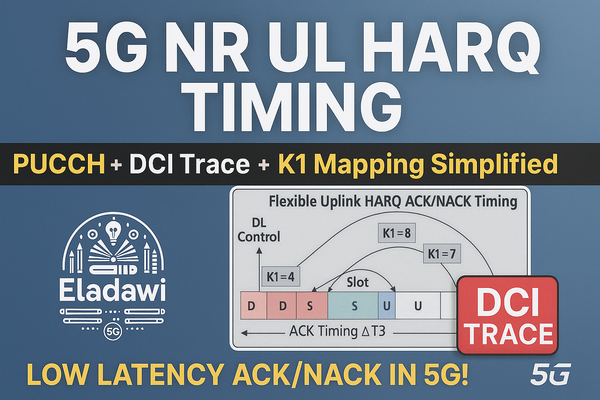
Introduction In 4G FDD, the uplink HARQ feedback timing was fixed. In 5G, this changes because of TDD operation and low-latency requirements. 5G introduces two methods for uplink HARQ feedback: * Flexible timing * Multiplexing timing This allows the network to optimize feedback delay depending on system configuration and UE capability. Flexible
Posts
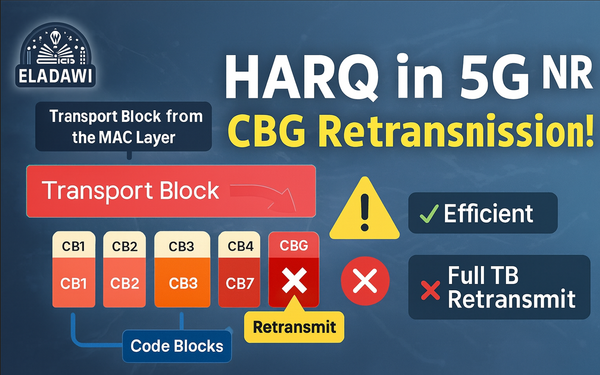
💡 Why CBG Retransmission Matters? * It enables partial retransmissions of affected code blocks, reducing network load and improving spectral efficiency—especially important for large transport blocks in 5G. How it works? * As shown in the below picture, Large Transport Blocks (TBs) are segmented after CRC attachment to prevent exceeding the maximum
youtube
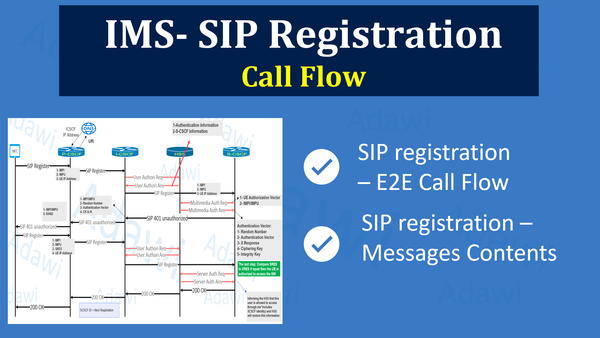
In this video, we explain IMS SIP registration with a step-by-step call flow and message details.
youtube
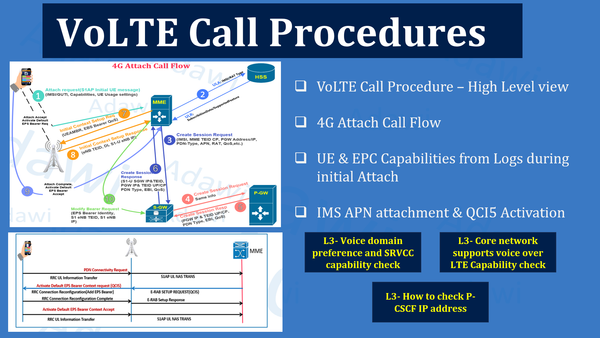
In this video, we explain VoLTE call procedures in 4G LTE. You will see how attach and registration work, how IMS APN and QCI5 activation are done, and how UE and EPC capabilities can be checked from logs. A clear step-by-step view of VoLTE call setup and signaling. #VoLTE #4G
youtube
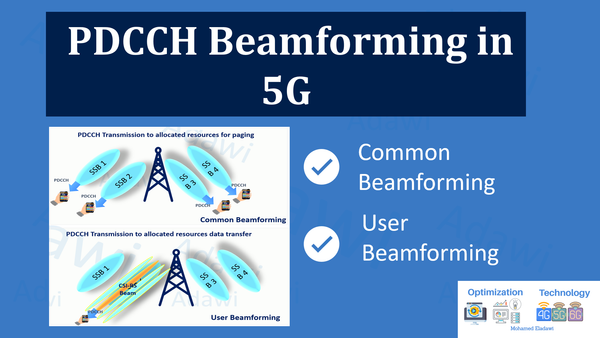
Unlike 4G, 5G supports PDCCH beamforming. In this video, we’ll give a high-level overview of 5G PDCCH common and user beamforming, including its use cases.
youtube
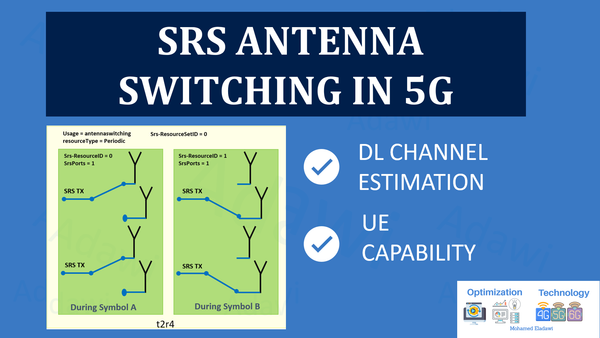
In this video, we explain how 5G uses SRS antenna switching to estimate the downlink channel in TDD mode, why the UE switches antennas, and how to check if a UE supports this feature for accurate beamforming. #5G #SRS ##3GPP
youtube
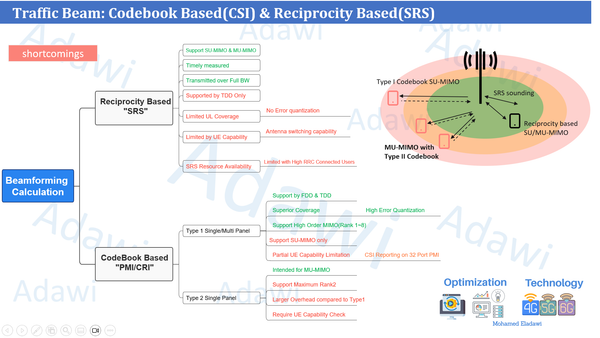
In this video, we explain how 5G uses SRS — the Sounding Reference Signal — to perform PDSCH beamforming in TDD networks. Using the concept of channel reciprocity, the gNB can estimate the downlink channel based on uplink SRS measurements. We’ll walk through how the process works, when it's
youtube
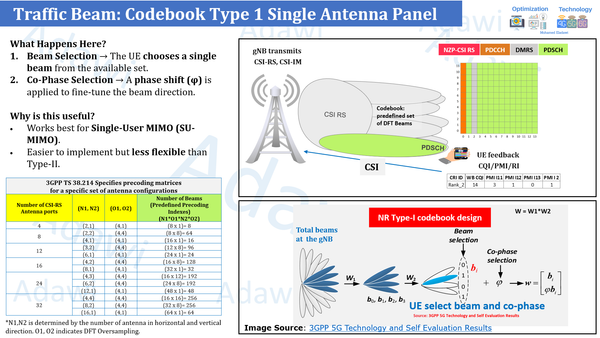
In this video, we will explain what Codebook Type 1 means in 5G. You'll learn how the gNB sends reference signals, and how the UE chooses the best beam and a small phase shift to improve signal quality. This is mainly used for single-user MIMO and is easier
youtube
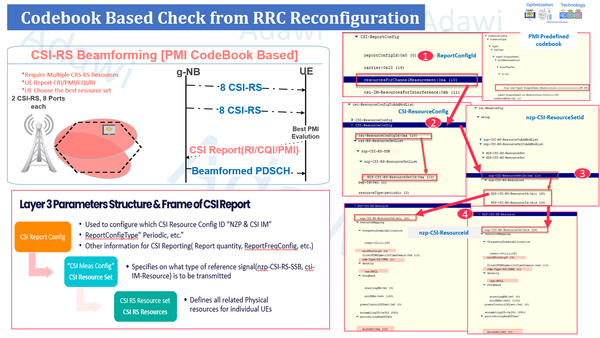
In this video, we simplify how 5G gNB selects the optimal beam for each UE using CSI feedback. We walk through the complete flow — from CSI-RS measurement and UE feedback (PMI, CQI, RI) to beamforming implementation — and explain key RRC configurations and UE capability checks from the 3GPP standards. good
youtube
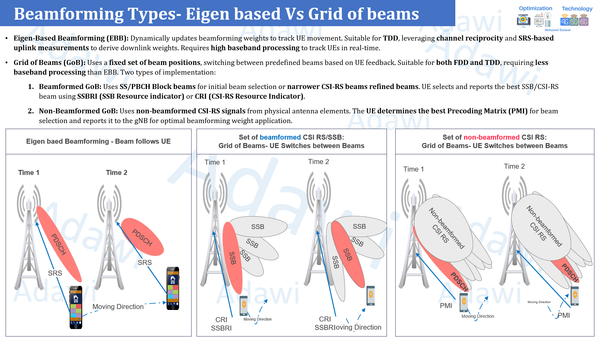
This video covers a high-level view about 5G Beamforming types: * Eigen-Based Beamforming (EBB): Dynamically updates beamforming weights to track UE movement. Suitable for TDD, leveraging channel reciprocity and SRS-based uplink measurements to derive downlink weights. Requires high baseband processing to track UEs in real-time. * Grid of Beams (GoB): Uses a
youtube
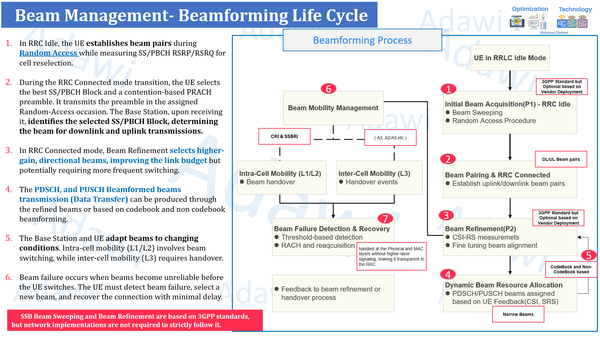
This video explains the 5G beamforming life cycle in a simple way. * It starts with how the UE finds beams in idle mode, then how it connects and refines those beams. * You’ll also see how data is transmitted using beamformed signals, and how the network handles mobility and beam